Is your Tiburon view worth six figures, or are you leaving money on the table? In a market where water, skyline, and island vistas set the tone for price, understanding how to quantify a view can change your outcome. If you are preparing to sell or deciding what to pay, you need a clear way to score, compare, and adjust for the unique hillsides, microclimates, and sightlines that define this town.
This guide gives you a practical framework to value views in Tiburon. You will learn how to use paired sales, simple models, and a local view-rating system, plus how to adjust for fog, wind, and permanence. You will also see example pricing scenarios to help you set smart expectations. Let’s dive in.
What a “view” means in Tiburon
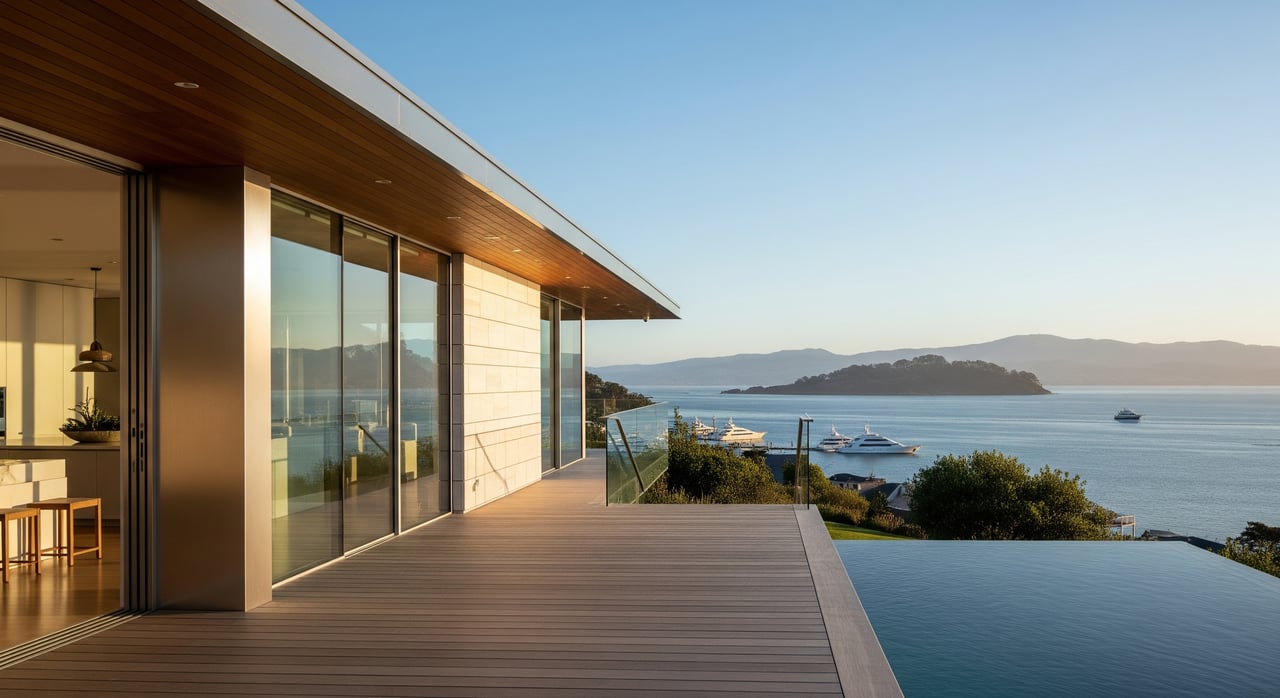
In Tiburon, a “view” is more than a buzzword. Buyers look for water activity on Richardson Bay and the San Francisco Bay, the San Francisco skyline and Golden Gate corridor, Angel Island, and broad open-water panoramas. Each type creates a different emotional and market response.
Key attributes that shape value:
- Scope: panoramic vs. partial or peek-a-boo.
- Elevation and distance: close water plane vs. distant skyline.
- Permanence: protected corridor vs. a buildable lot that could block the view.
- Orientation: south and southwest often feel sunnier; west-facing brings sunsets and more marine influence.
- Microclimate: fog, wind, and sunlight patterns.
- Privacy and noise: road or boat noise can reduce the net premium.
Buyers pay for daily enjoyment, not just a photo. That is why usability, permanence, and comfort matter as much as the postcard moment.
Quantify the view premium
There is no single universal number. In Tiburon, combine multiple methods and a clear narrative that ties each adjustment to evidence.
Paired-sales comparisons
- Concept: Match two similar sales where the primary difference is the view. The price gap approximates the view premium.
- Steps: Stay within the same sub-neighborhood and elevation band, match lot size, living area, beds, baths, finish level, and sale date. Same street or block is ideal.
- Output: Express the difference as a percent or $ per square foot.
- Caveat: Tiburon has small sample sizes and unique homes. Document any remaining differences to keep the analysis credible.
Simple statistical modeling
- Concept: Use multiple recent sales and control for size, beds, baths, age, lot, and time-of-sale to isolate a view effect.
- Practice: Even a spreadsheet regression can help. Use categories such as full water view, partial water view, and skyline view.
- Caveat: Coefficients can be unstable with small local samples, so use this to support, not replace, paired sales.
Percent or $/sqft adjustments
- Concept: Apply a premium as a percent of a non-view base price or as a $/sqft lift tied to view quality.
- Best practice: Tie bands to actual paired sales or model outputs. Present as a range, not a single point.
Build a view-rating scale
Create a simple A–E or 1–5 scale to translate a qualitative view into a consistent adjustment.
- A / 5: Panoramic, multiple landmarks (water plus skyline), high permanence.
- B / 4: Strong water or skyline with minor obstructions.
- C / 3: Partial or peek-a-boo with some obstruction risk.
- D / 2: Distant or limited window of view, higher blockage risk.
- E / 1: No meaningful view.
Map each rating to a premium range based on paired sales or modeling. This helps you stay consistent across listings and comparables.
Tools that help
- GIS and line-of-sight: Visualize corridors and elevation to confirm what is truly visible.
- County assessor and parcel maps: Check neighboring lot buildability and potential blockage risk.
- MLS filters and photos: Start with tags like water view or panoramic view, then verify in person.
Adjust for microclimate and orientation
Fog, wind, and sun exposure can raise or lower the value of the same view.
- Fog and marine layer: West and northwest exposures often see more fog and cooler temperatures. South and southeast slopes tend to be sunnier.
- Wind: Ridge-top and exposed sites can feel impressive but less usable outdoors. Buyers may discount heavily wind-swept decks.
- Solar exposure: Morning versus evening sun changes how outdoor spaces are used. West-facing brings sunsets and, in some months, more marine influence.
- Proximity to open water: Salt exposure can increase maintenance and may modestly temper the premium.
Adjustment approach:
- If the view is frequently obscured by fog at typical use hours, reduce the premium.
- If wind limits outdoor living, reflect it in the premium and consider the cost of mitigation.
- Favor south and southwest aspects for sun if all else is equal.
Choose Tiburon comparables
Treat view quality as a variable as important as square footage.
Core criteria
- Proximity: Same sub-neighborhood and elevation band.
- Orientation and sightline: Match compass direction and what is visible (skyline vs. Richardson Bay water plane).
- Elevation and setback: A property 50 to 100 feet higher can have a different view quality than a lower neighbor.
- Property attributes: Size, beds, baths, renovation level, lot size, and parking.
- Date of sale: Prefer the last 6 to 12 months; adjust older sales for time.
- View rating: Assign ratings to both subject and comps and align them.
Validate comps
- Use county GIS and assessor data for elevation and lot lines.
- Review permits and building activity on nearby parcels to gauge permanence risk.
- Confirm sightlines with site visits and elevation tools.
Small sample strategies
- Use several comps and triangulate, rather than relying on one.
- If you must look outside Tiburon to nearby waterfront communities, document why and how you adjusted for differences.
A simple pricing workflow
Follow this repeatable process to price view homes with confidence:
- Establish a base price without the view
- Find comps with similar structure, lot, and condition but minimal or no view.
- Calculate a baseline $/sqft or median price.
- Determine the view rating and orientation
- Assign a rating using photos and on-site observation.
- Note orientation, fog patterns, and permanence factors.
- Identify paired sales and complementary comps
- Prioritize matched pairs where view is the main difference.
- Add same-rating comps and adjust for non-view differences.
- Estimate a raw view premium
- Use paired-sale gaps or model coefficients to estimate a premium as a dollar amount or percent.
- If multiple indicators exist, weight and average them.
- Adjust for microclimate, permanence, and usability
- Reduce or increase the premium for fog, wind, sun, noise, and blockage risk.
- Document each adjustment and the rationale.
- Present a supported price range
- Provide a best-estimate list price and a conservative lower bound to create appraisal and negotiation resilience.
Example pricing scenarios
These illustrations show how the framework works. Numbers are hypothetical and for example only.
Scenario A: Panoramic Bay plus skyline, high permanence
- Base comparable (no view): $2,000,000
- Paired-sales view premium: about 12% ($240,000)
- Microclimate: south-facing, low fog, no reduction
- Estimated value: $2,240,000
Scenario B: Partial peek-a-boo from a second-story deck, adjacent lot may be buildable
- Base comparable: $1,500,000
- Partial view premium: about 6% ($90,000)
- Permanence adjustment: reduce by 40% ($36,000)
- Estimated value: $1,554,000
Scenario C: West-facing sunset view with heavy seasonal fog
- Base comparable: $1,800,000
- Sunset premium: about 8% ($144,000)
- Fog adjustment: reduce by half ($72,000)
- Estimated value: $1,872,000
Seller checklist: prepare and present the view
- Document the view: Photograph daytime, sunset, and typical fog conditions to set honest expectations.
- Prove permanence: Gather neighbor permit histories, zoning and building envelopes, and any easements that protect corridors.
- Elevate usability: Strategic pruning where allowed, clean glass and railings, stage outdoor seating with wind protection.
- Disclose early: Note factors that reduce value, such as seasonal tree growth or known easements, to build trust.
Buyer tips: value, risk, and diligence
- Test usability: Visit at different times and days to see fog, wind, and light patterns.
- Verify permanence: Review zoning, setbacks, and permit history on adjacent parcels to evaluate blockage risk.
- Budget for upkeep: Salt exposure, wind screens, and landscape maintenance can affect the effective premium.
- Ask for evidence: Request documentation of view claims and any prior appraisals that addressed the view.
Appraisal and financing notes
- Prepare your package: Provide appraisers with view ratings, paired-sales exhibits, and elevation or GIS visuals that support permanence.
- Line up comps: Use multiple credible comparables that carry the same view attribute to reduce appraisal gap risk.
- Narrate the adjustments: A concise memo that explains microclimate, orientation, and permanence adjustments can help align expectations.
Next steps
Pricing a view home in Tiburon is part art and part science. When you combine a disciplined comp set, a consistent rating scale, and practical microclimate adjustments, you give yourself a clear advantage, whether you are listing or evaluating an offer. If you want a private, data-backed strategy tailored to your property and sub-neighborhood, let’s talk.
Discover what is rare about your home and how to position it for premium results. Schedule a confidential consultation with Chelsea E. Ialeggio.
FAQs
How do I start valuing a Tiburon view?
- Begin with a base price from similar non-view homes, assign a view rating, then use paired sales and microclimate adjustments to estimate a premium.
What adds the most value to a Tiburon view?
- Panoramic water plus skyline visibility with high permanence typically commands the strongest premium, especially with sunny south or southwest exposure.
How should fog or wind change the price?
- Reduce the premium if fog regularly obscures visibility at typical use hours or if wind limits outdoor enjoyment and requires mitigation.
Which comparables should I choose for a view home?
- Favor comps in the same sub-neighborhood, elevation band, and orientation that share the same view rating and recent sale dates.
How do I evaluate view permanence risk?
- Review adjacent parcel buildability, zoning and setback rules, and recent permits to see if future development could block the sightline.
Can I use nearby towns as comps?
- You can consider nearby waterfront communities if Tiburon samples are thin, but document why they are relevant and adjust carefully for differences.