You do not need a massive estate to make indoor-outdoor living feel seamless in Kentfield. What matters most is how your home, yard, and exterior materials work together through every season. If you are thinking about updating your property, preparing it for sale, or simply making daily life feel easier, the right design choices can improve flow, comfort, and long-term appeal. Let’s dive in.
Why Kentfield Homes Need Thoughtful Outdoor Design
Kentfield’s climate makes outdoor living especially appealing, but it also calls for balance. NOAA climate normals show warm, dry summers, mild winters, about 44.39 inches of annual precipitation, and very little snow. That means your outdoor spaces need to feel comfortable in sunny months while still holding up well during the wet season.
In practice, the best outdoor areas in Kentfield are not just beautiful in July. They also manage shade, drainage, and seasonal wear with ease. When those elements are built in from the start, your patio, deck, or courtyard feels like a natural extension of the home instead of a separate zone you only use part of the year.
Start With Flow, Not Features
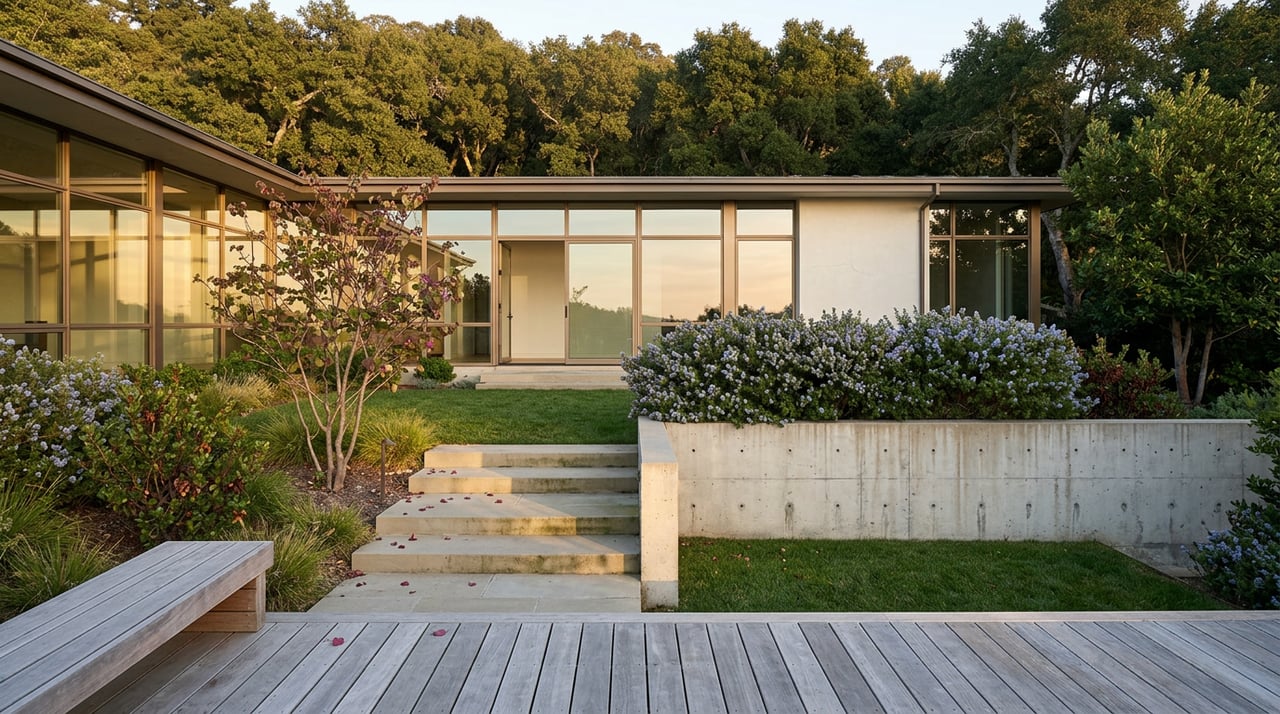
It is easy to focus first on headline upgrades like a built-in barbecue, new deck, or large entertaining terrace. In many Kentfield homes, though, the most successful indoor-outdoor design starts with circulation and sightlines. You want the transition from interior rooms to outdoor space to feel intuitive, open, and visually calm.
Marin County’s design approach for single-family projects emphasizes compatibility, high-quality architecture, green building techniques, universal design, and relationships between structures, streets, and surrounding properties. Applied to outdoor living, that often supports design choices that feel integrated with the house rather than added on later.
Prioritize the rooms you use most
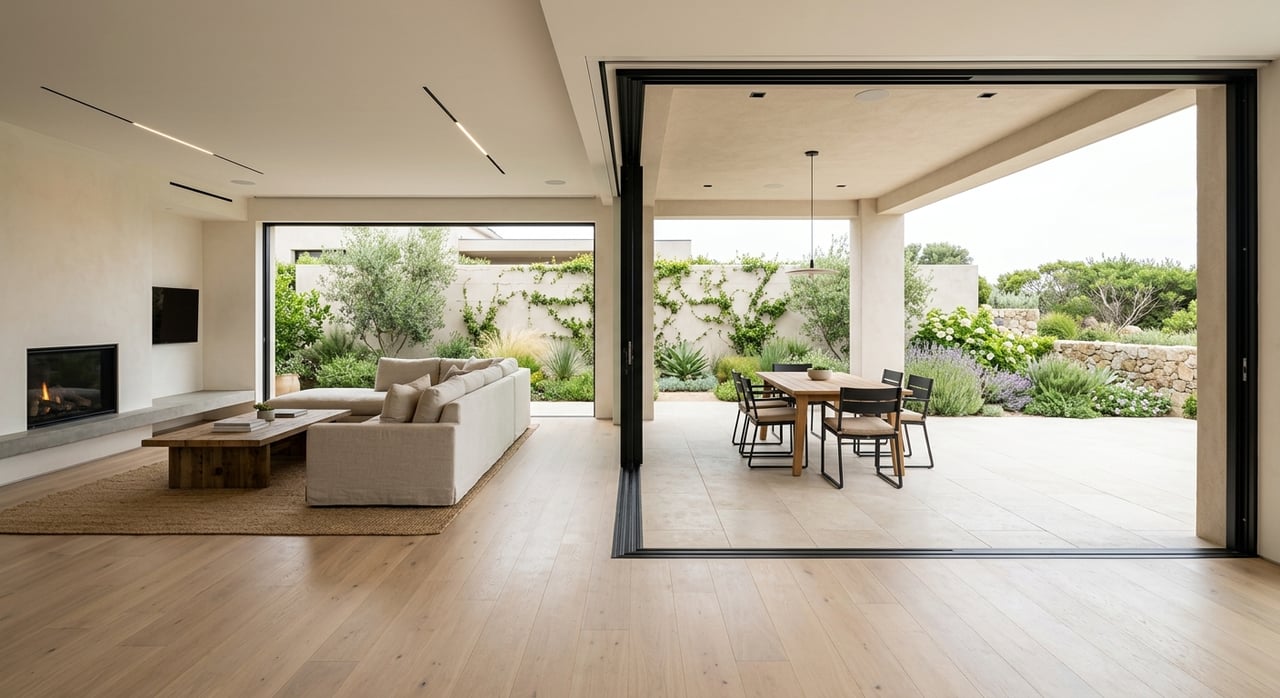
The easiest indoor-outdoor living usually begins near the kitchen, family room, or main living area. When those spaces connect directly to a usable patio or deck, everyday routines become simpler. Morning coffee, outdoor dining, and casual gatherings feel more natural when you do not have to work around awkward steps, narrow doors, or disconnected layouts.
Keep materials visually consistent
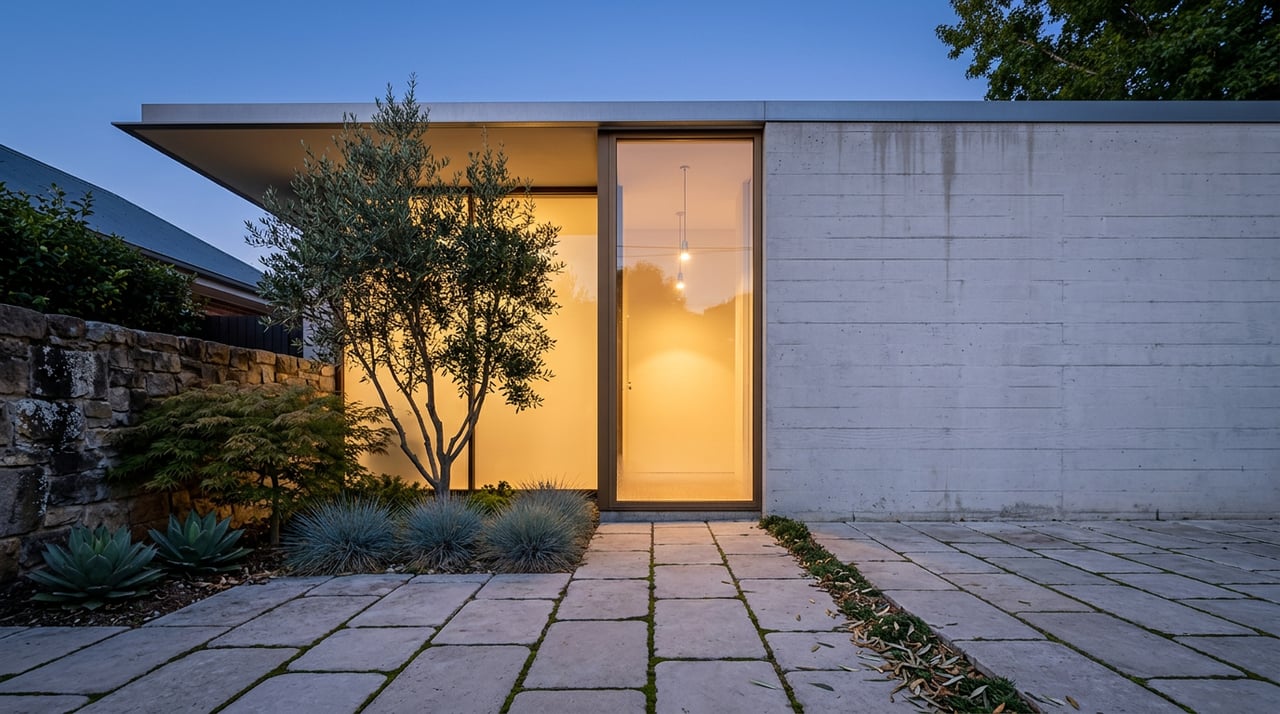
One of the simplest ways to create a seamless effect is to repeat colors, textures, or finishes from inside to outside. That does not mean everything has to match exactly. It means the transition should feel intentional, restrained, and scaled to the architecture of the house.
Size outdoor rooms carefully
Bigger is not always better. Marin County guidance supports visual restraint and compatibility, which is a helpful lens for outdoor projects. A well-proportioned terrace or covered patio often feels more valuable than an oversized addition that dominates the lot or competes with the home itself.
Design for Kentfield’s Climate
Kentfield’s weather supports a long outdoor season, but comfort depends on smart protection from both sun and rain. Since summer is relatively dry and warm, and rain is concentrated from late fall through spring, flexible shade and weather management matter.
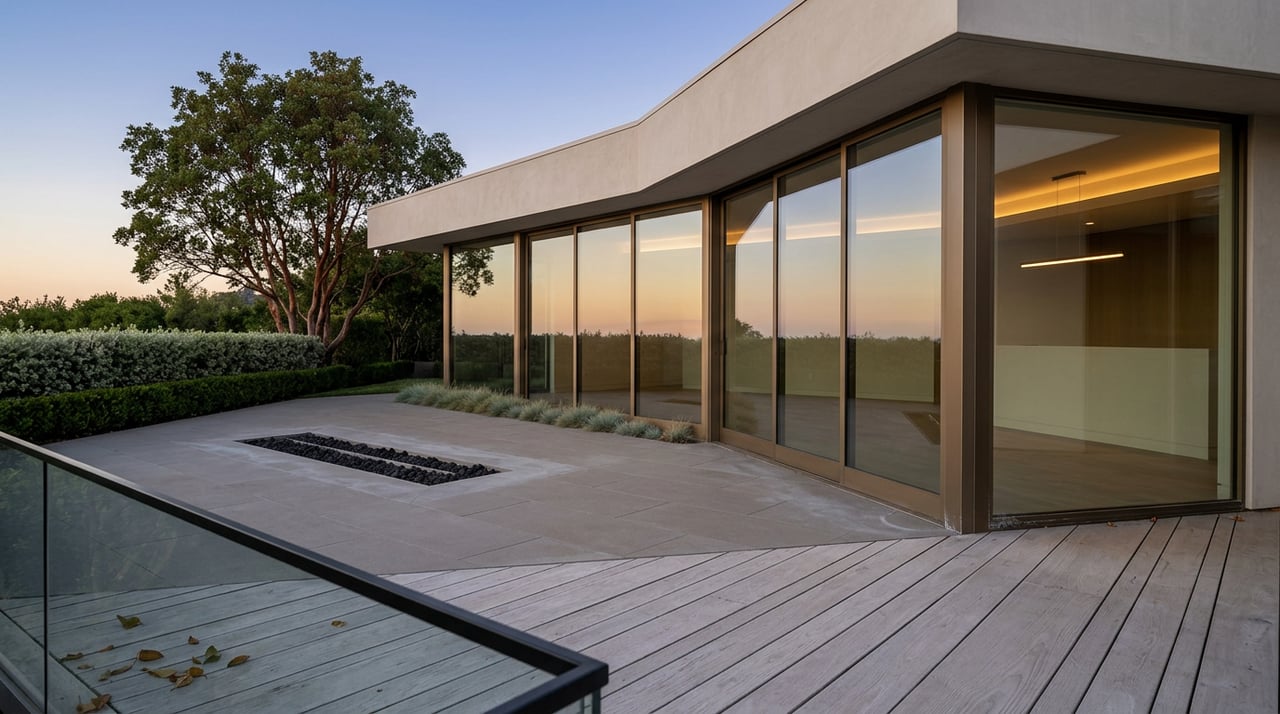
Partially covered patios, deep eaves, and pergola-style shade structures are often practical choices in this climate. They can extend how often you use the space without making it feel closed in. This kind of flexibility is especially useful if you want an outdoor area that works for quiet daily living as well as entertaining.
Add shade where you actually sit
Instead of covering an entire yard, focus on the places where people spend the most time. Dining areas, lounge seating, and doors that open from the main living space usually benefit most from overhead protection. A targeted approach often looks cleaner and feels more architectural.
Plan for drainage early
In Kentfield, outdoor design should account for winter runoff and wet-season performance. Patios, decks, and walkways need to stay usable and safe when rain arrives. If your project involves excavation, grade changes, retaining walls, or major hardscape work, Marin County may require review or permits.
Choose Landscaping That Fits Marin
The most locally aligned landscape strategy in Marin County is usually low-water, native, and fire-conscious planting. County design guidelines state that planting should reflect the local landscape and favor species that are primarily native, drought tolerant, fire resistant, and compatible.
This approach can also make your outdoor living areas easier to maintain. Instead of treating landscaping as a decorative afterthought, think of it as part of the experience of moving through the property. Planting can define privacy, soften hardscape edges, and frame views without adding clutter.
Reduce thirsty lawn areas
If you are reworking a yard, replacing part of a lawn with lower-water planting or hardscape may be worth considering. Marin Water offers drought resources and a Cash for Grass lawn replacement rebate, which makes lawn reduction a realistic path for many homeowners. In a market like Kentfield, a polished low-water landscape can also read as intentional and current.
Use plants to support, not overwhelm
Outdoor rooms feel more effortless when landscaping is controlled and purposeful. Layered planting near seating areas can create softness and enclosure, but it should not crowd circulation paths or compete with the architecture. In resale terms, a composed and easy-care landscape often appeals more broadly than one that feels overgrown or high maintenance.
Make Fire Safety Part of the Design
In Kentfield, fire resilience is not separate from good design. It is part of what makes an outdoor space functional, responsible, and easier to maintain. CAL FIRE and local fire guidance note that decks, balconies, and stairs are vulnerable to ember ignition, which makes material choices and maintenance especially important.
The first five feet around a structure should be ember-resistant, with hardscape preferred over combustible mulch. Guidance also recommends limiting combustible items on decks and keeping roofs, gutters, decks, and stairways clear of debris. Depending on topography and vegetation, defensible space can extend 0 to 30 feet from buildings, structures, and decks, with additional clearance sometimes needed.
Smart fire-conscious design moves
- Use gravel, pavers, stone, or other hardscape close to the home
- Limit combustible mulch near decks, stairs, and foundations
- Choose ignition-resistant or noncombustible materials for decks, steps, stairs, and railings when possible
- Keep deck furnishings restrained and easy to move
- Clear leaves and debris from roofs, gutters, decks, and stairways regularly
These choices can still look elevated and refined. In many cases, the most attractive outdoor spaces are the ones that avoid excess and keep details clean.
Furnish Outdoor Spaces With Restraint
Furniture has a major effect on whether a space feels effortless or busy. In Kentfield, weather-resistant and easy-to-move pieces are practical because outdoor areas need to perform in both wet weather and fire season. A low-clutter layout also helps patios and decks feel more like part of the architecture.
The goal is not to fill every corner. It is to support the way you actually live in the space. A few well-scaled seating pieces, a dining table in the right location, and clear walking paths usually create a more polished result than too many small furnishings.
Know When Permits May Apply
Many exterior projects in unincorporated Kentfield fall under Marin County review, even when they seem straightforward. Marin County notes that most construction projects require a building permit, and its permit portal includes an uncovered deck or patio permit type. The county also issues grading permits for excavation, filling, site clearing, and related work to reduce landslide, erosion, and flood risk.
That means it is wise to check county requirements early if you are considering:
- Deck additions
- Significant patio work
- Retaining walls
- Grade changes
- Site clearing
- Exterior structures tied to lifestyle use
Recent Kentfield planning records also show review of additions such as a barbecue area, pool equipment area, bike shed, retaining wall, and sports court. The takeaway is simple: even attractive lifestyle upgrades may need planning or permit review before construction begins.
Think About Resale While You Design
If you are investing in outdoor improvements, it helps to think beyond personal taste alone. In Kentfield, the strongest projects often look like they belong to the original house. Durable paving, coherent materials, well-placed shade, low-water planting, and fire-conscious detailing tend to support both daily enjoyment and long-term market appeal.
This is especially relevant if you may sell in the coming years. Buyers often respond to outdoor spaces that feel usable, calm, and complete. A yard that looks beautiful but requires constant upkeep or feels disconnected from the home may not deliver the same impression.
Features that often age well
- Simple, durable paving
- Outdoor rooms scaled to the house
- Shade in the right locations
- Low-water, locally appropriate planting
- Clean transitions from interior spaces to patios or decks
- Materials and detailing that feel architecturally consistent
In a design-forward market like Kentfield, restraint usually reads as confidence. The goal is to create a setting that feels effortless because it has been thought through carefully.
A Strategic Approach Matters
Whether you are renovating for your own enjoyment or preparing a home for market, indoor-outdoor living should be approached as part of the property’s larger story. The most compelling Kentfield homes are often the ones where exterior spaces feel aligned with the architecture, climate, and site conditions. That kind of cohesion is not accidental.
If you are deciding which improvements will have the strongest visual and resale impact, it helps to look at your home through both a design and market lens. Thoughtful outdoor living can elevate how a property lives now and how it is perceived later.
For tailored guidance on preparing, positioning, or improving a Kentfield property, connect with Chelsea E. Ialeggio. Discover what’s RARE about your home and schedule a private consultation.
FAQs
What makes indoor-outdoor living work well in Kentfield homes?
- In Kentfield, the most effective indoor-outdoor spaces usually combine direct access from main living areas, climate-appropriate shade, good drainage, and materials that feel consistent with the home’s architecture.
Do outdoor projects in unincorporated Kentfield need Marin County permits?
- Many do. Marin County says most construction projects require a building permit, and exterior work such as decks, patios, grading, retaining walls, and site changes should be checked early before construction starts.
What landscaping works best for Kentfield outdoor living areas?
- Marin County guidance supports planting that reflects the local landscape and uses primarily native, drought-tolerant, fire-resistant, and compatible species, often paired with lower-water layouts and restrained hardscape.
How should fire safety shape deck and patio design in Kentfield?
- Fire-conscious design in Kentfield often includes hardscape within the first five feet around the home, fewer combustible items on decks, debris-free gutters and stairs, and ignition-resistant or noncombustible materials where possible.
Which outdoor upgrades tend to support resale in Kentfield homes?
- Outdoor improvements that usually support resale are the ones that feel integrated with the original house, including durable paving, well-placed shade, low-water planting, and clean, cohesive material choices.