Start at Blackie's Pasture on a weekday morning and the Old Rail Trail feels like one continuous thing. Flat asphalt, a wide dirt shoulder for anyone who wants off the hard surface, benches spaced out along Richardson Bay, a bronze horse standing watch over the meadow. You could walk it with your eyes half closed. Then, without much warning, the trail simply stops being a trail. Somewhere around the two-mile mark, the separated path narrows into a painted bike lane running alongside actual car traffic on Tiburon Boulevard, and the walk that felt like a park suddenly feels like a street.
That shift is not an accident of maintenance or a stretch the town forgot to finish. It is where the old railroad ended and the road grid took over, and understanding why explains a lot about how this trail behaves, what the town keeps spending money to fix, and why the last half mile into downtown will probably never feel like the first two.
Where the Rail Actually Ends
The Old Rail Trail follows the old Northwestern Pacific Railroad route that once connected Tiburon to San Francisco by ferry, which is also why longtime residents and trail maps call it three different things: the Tiburon Historical Trail, the Tiburon Bike Path, and the Tiburon Linear Park, depending on who's talking and which stretch they mean. That naming confusion is a clue. The corridor was never built as one continuous piece of infrastructure. It was a working rail line, and rail lines end at depots, not at convenient trailheads.
Peter Donahue extended the San Francisco and North Pacific Railroad to Tiburon in 1884, and the depot that still stands at the water's edge in Shoreline Park was built two years later, in 1886. For decades, freight and passengers moved through that building before transferring to ferries crossing the bay. Trains ran daily. One of the more memorable cargo runs carried Al Capone through Tiburon on his way to Alcatraz in 1934. By around 1920, the railroad had shifted its major rail and ferry passenger service to Sausalito, and the Tiburon operation declined until the railroad abandoned the building in 1939.
Once the tracks stopped running, the right of way became the basis for the trail you walk today, but only for the portion that actually followed dedicated rail bed. At roughly the two-mile point, the historical alignment gives way to Tiburon Boulevard itself, and the trail becomes an on-street bike lane for the final stretch into downtown. That's not a design flaw. It's what happens when a recreational path is built on top of transportation infrastructure that had a specific endpoint, and the last few blocks into town were never rail bed to begin with.
The Landmarks You Pass Whether You Notice Them or Not
The trail's first landmark is also its namesake. Blackie's Pasture takes its name from a swaybacked retired cavalry horse who spent his final years grazing in that field, visited daily by his owner, Anthony Connell, and fed carrots and sugar by generations of neighborhood kids. For nearly three decades, you couldn't leave or return to the peninsula without passing him. When Blackie died, the Tiburon Peninsula Foundation commissioned a life-size bronze sculpture from Bay Area artist Albert Guibara, a gift from the family of Gordon Strawbridge, Tiburon's first mayor, installed in the pasture in June 1995. It's the horse everyone photographs, but it's also a small monument to how the town remembers its own history in public space rather than behind glass.
A short distance in, the trail crosses a small creek bed on Schapero Bridge, named for the Tiburon town treasurer who was responsible for protecting Blackie's Pasture. Past that, the corridor opens onto McKegney Green and South Knoll, two open space areas that give the trail its width and its playing fields, and near the trailhead a landscaped garden holds more than 250 native plant species, the kind of detail that rewards a slow walk more than a fast one.
None of this is signage-level trivia. It's the difference between treating the trail as a commute and understanding it as a place with a memory, which matters more when the town starts tearing pieces of it up to fix them, which it does on a schedule.
What Gets Rebuilt, and Why It Happens in Pieces
The Old Rail Trail is not static infrastructure. It gets rehabilitated in phases, on purpose, because closing the whole thing at once would cut off the only car-free route between Blackie's Pasture and downtown. In 2020, the town undertook a pavement rehabilitation project and split the work into six separate segments, limiting contractor activity to one section at a time specifically to minimize how much of the trail was closed on any given day.
That same pattern showed up again in the town's most recent capital cycle. For the fiscal year that closed this past June, Tiburon set aside $6.43 million for capital projects across town, with about $1.06 million of that earmarked for parks improvements, including replacing a bridge along the Old Rail Trail on the way into downtown, according to reporting from the Ark Newspaper when the plan was adopted. Whether that particular bridge work happened on schedule or is still working through the town's process, the logic behind it hasn't changed: treat the trail as infrastructure that needs scheduled reinvestment rather than scenery that simply exists, and do it in phases so most of the corridor stays open while one piece gets rebuilt.
If you noticed fencing near a bridge crossing or a detour sign sometime in the past year, this is almost certainly why. The town has done this before, and it will likely do it again, because a trail built on a 19th century rail bed needs 21st century upkeep whether anyone's watching or not.
The Season Decides What You See
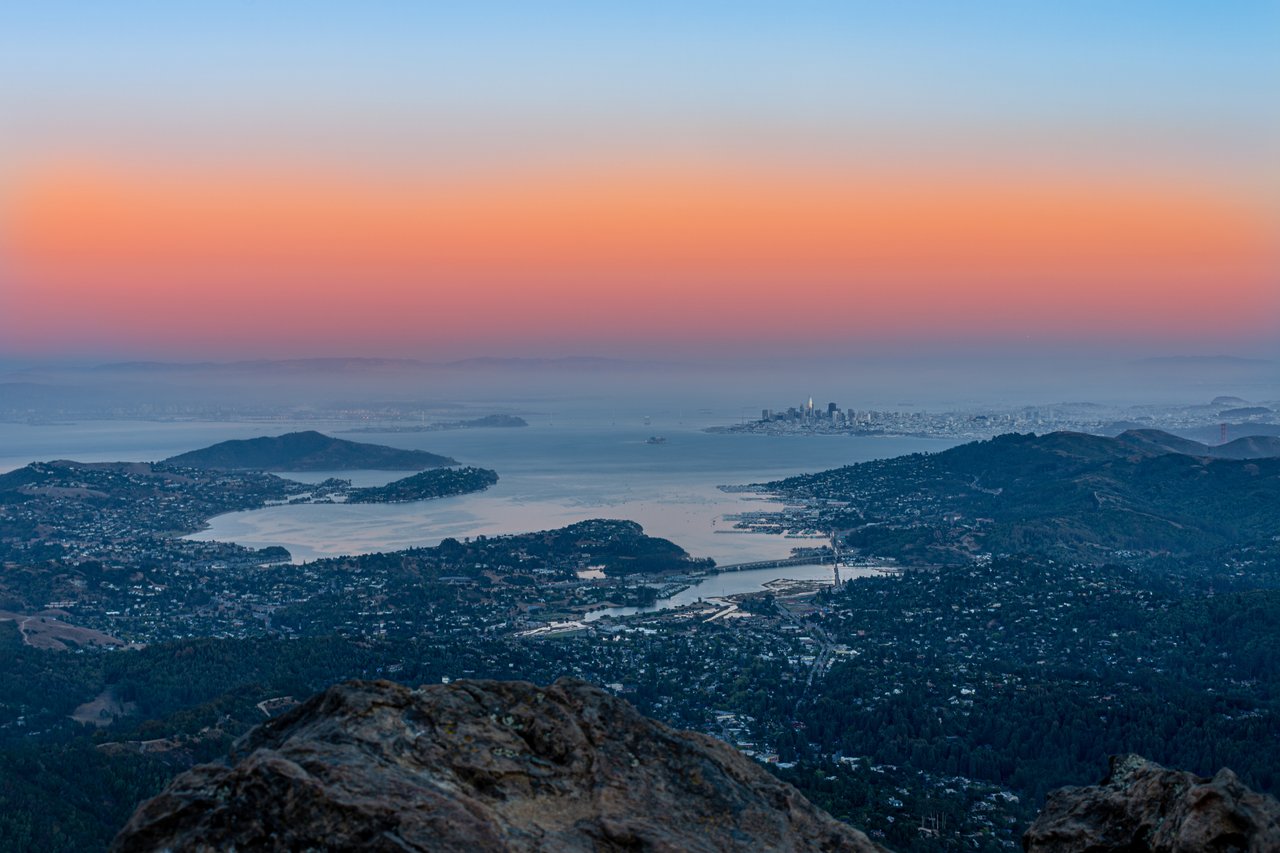
Two things on this trail change with the calendar, and both are worth timing around if you haven't already built them into your routine. The first is the birds. The mudflats along Richardson Bay, right at the start of the trail near Blackie's Pasture, host more than a million migratory birds every year, alongside year-round residents like great blue herons, snowy egrets, and red-tailed hawks. Walk it in winter and the mudflats are working. Walk it in August and you'll see a quieter, thinner mix.
The second is the museum at the far end. The Railroad & Ferry Depot Museum in Shoreline Park, housed in that original 1886 Greek Revival depot building, runs on a seasonal schedule: Wednesdays, Saturdays, and Sundays, 1 to 4 p.m., April through October. With today's date landing in late August, that leaves roughly nine weeks left in this year's season before the doors close until spring. Inside is a working HO-scale model of the Tiburon rail yard as it looked around 1909, along with a restored stationmaster's office based on the memories of Florence Bent Palmer, whose father ran the depot. It's a five-minute detour that most people who live here have never made, largely because the hours are easy to miss if you're not looking for them.
Where Regulars Actually Stop
Ask anyone who walks this route regularly where they grab food and the answers cluster around the same handful of places. Near the Blackie's Pasture end, Woodlands Market and Rustic Bakery are the standard picnic grab before heading out onto the trail, close enough to the trailhead that carrying a coffee and a pastry the first quarter mile is normal, not inconvenient. Down at the downtown end, near the ferry terminal, Sam's Anchor Café and Tiburon Tavern are the two spots locals mention most often for a meal that bookends the walk rather than interrupts it.
None of this requires a reservation or a plan. It's just the pattern that's formed around the trail's two natural endpoints, one built around picnic supplies and one built around a sit-down table with a view.
The Friction Nobody Mentions Until You Hit It
A few things catch people off guard even after years of walking this route:
- Weekend parking at Blackie's Pasture fills fast. There are two free lots directly off Tiburon Boulevard, but arriving early on a Saturday or Sunday is the difference between parking steps from the trailhead and circling for ten minutes.
- The trail is wide enough for walkers and cyclists to coexist, but the on-street bike lane past the two-mile mark removes that buffer entirely, which is exactly where painted lines and real traffic start to matter.
- Dog waste bag stations are placed frequently enough that forgetting your own isn't usually a problem, which matters given how many dog walkers use this corridor as a daily loop.
None of these are complaints. They're just the texture of a trail that gets heavy, consistent use, which is its own kind of compliment.
The Old Rail Trail rewards the kind of attention that comes from actually living here rather than just passing through once. It's not one trail so much as a rail bed and a bike lane stitched together at a seam most people never think to look for, maintained in phases by a town that treats it as real infrastructure, and shaped season to season by birds that show up on their own schedule and a museum that keeps its own hours. Knowing where the seam is doesn't change the walk. It just means you're paying attention to the same thing your neighbors are, whether they've said so out loud or not.
If Tiburon's rhythms, from its trail to its waterfront, are the reason you're here, RARE Properties Northern California would welcome the chance to talk about what's next for your home in this town. Discover what's RARE about your property, schedule a private consultation whenever you're ready.